
Air Conditioner Replacement Cost in Toronto & the GTA
Published · Updated
The Short Answer
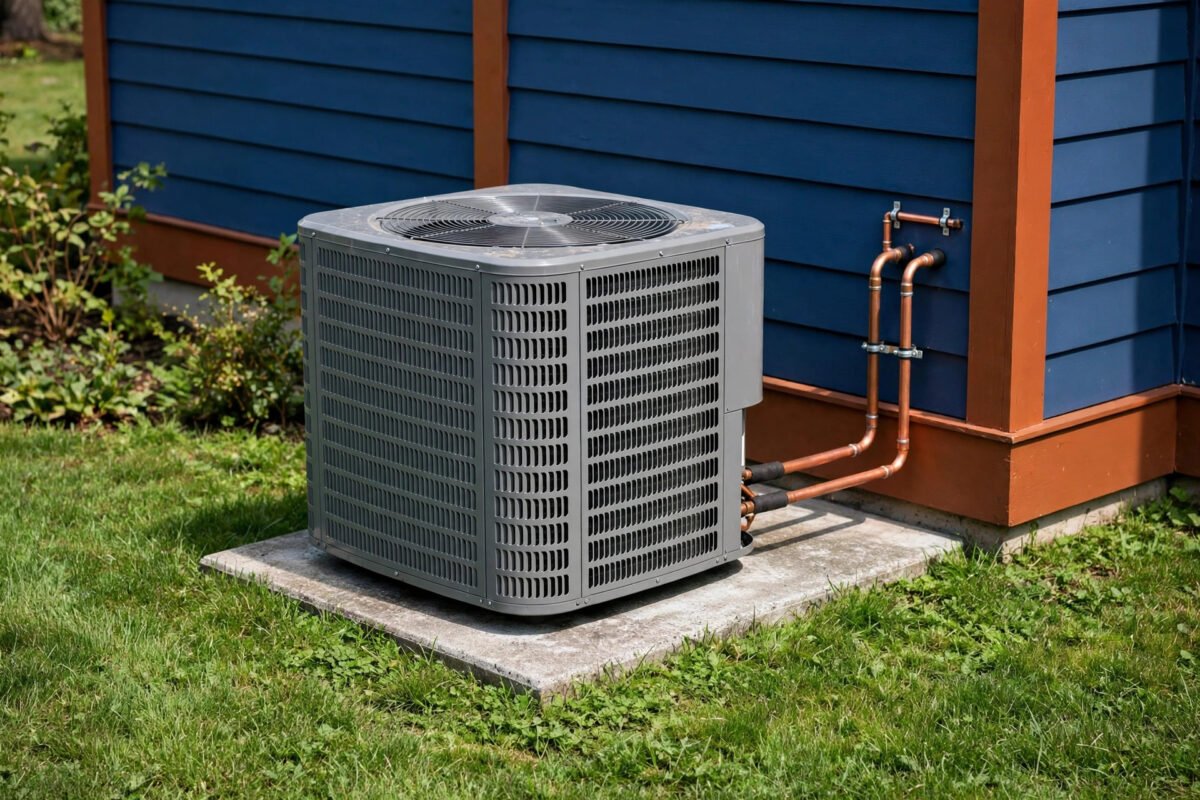
ARMANCH publishes one firm air conditioner price, and it anchors everything on this page. A standard replacement of a residential central air conditioner with an Armstrong Air A7 (model A7AC13F24P — 2 ton, single stage, with a TXV evaporator coil) is $4,100 installed at our regular published price, and $3,900 in our March and October offer windows. Prices are in CAD, taxes (HST) extra.
Read the conditions before you read the number, because the conditions are what the number means. That price is for a standard replacement in the Greater Toronto Area: an air conditioner is already in place, we remove the old unit and install the new one in its place, and the existing ductwork, refrigerant line set, condensate drain and electrical supply can serve the new unit. It is not a from-scratch price, and it is not a price for a different air conditioner — another size, efficiency tier or brand prices differently, and the exact price for your home is the one in the written quotation given before any work begins. That is the honesty rule we applied in our heat pump installation cost guide and our furnace replacement cost guide: a figure without its model, size and conditions can mislead, so we do not publish figures we cannot tie down that way.
Replacement vs. a Brand-New Installation
One distinction matters more than any other. Most GTA homeowners replacing an air conditioner are in the first situation below, but the two are different jobs at different prices:
A standard replacement. The home already has central air: ductwork in place, a line set run, a drain available and power already at the outdoor unit. The work is removal of the old unit, installation of the new outdoor unit and indoor coil, connection to what already exists, and commissioning. That is the job our published price describes.
A brand-new installation. The supporting work does not yet exist or cannot be reused — a first air conditioner in a home that never had one, a new or replaced line set, new ductwork or major duct modification, or power that has to be brought to where the unit will sit. That costs more: our own published note on the offers page is that new installations may cost up to 40% more than the standard-replacement prices for the same equipment. Treat the published price as the core of such a job, not the total — the written quotation sets the total.
What ARMANCH Actually Charges
Our air conditioner price lives on our seasonal offers page, where the regular and offer-window prices are published side by side. The offer windows run every March and every October; outside them, the regular published price applies, and an offer price applies only when your written quotation states it.
Because a central air conditioner and a gas furnace share the same blower and ductwork, many homeowners replace both in one visit: the companion furnace, an Armstrong Air A97 (model A97UH2E070B12SK — 97% AFUE, two-stage, constant-torque, 70,000 BTU/h input class), is $3,900 regular and $3,700 in the offer window, on the same standard-replacement conditions. Buying more than one system in the same project takes a further $200 off per unit, as published. Other sizes, models and brands are quoted per home; we would rather quote your actual air conditioner than publish a range wide enough to mean nothing.
Repair First, If It Makes Sense
Replacement is not always the answer, and a cost guide should say so. Our rule is repair first, if it makes sense — and an air conditioner is where that rule does real work. A failed capacitor, a worn contactor or a refrigerant leak that can be found and fixed in an otherwise sound unit is a repair, not a replacement. The economics turn on age, condition and extent of damage: a major repair — a compressor, above all — costing a large share of a new unit, on a system whose coil and other components are near the end of their lives, usually does not make sense. Refrigerant matters too: an older unit on phased-out refrigerant can turn a simple top-up into an expensive exercise.
The diagnosis itself is priced honestly. A residential service call is $130 including travel and the first 30 minutes, with additional labour at $110 per hour; a commercial or industrial call is $170, with additional labour at $150 per hour — all excluding HST, and no diagnosis, no charge: if we cannot identify the cause, the call costs you nothing. Standard-rate hours are Monday to Friday, 7 a.m. to 3 p.m.; calls are accepted 24/7 for urgent service — a home with no cooling in a heat wave does not wait for business hours.
What Moves the Price
Where a project has no published price to anchor to, these factors set the number in the written quotation:
Size and heat gain. The right size comes from the home’s heat gain — its windows, insulation, exposure and layout — not from the size of the unit coming out. An oversized air conditioner short-cycles, cools the air without properly dehumidifying it, and wears early; an undersized one runs all day and still cannot hold the house on the hottest afternoons.
Efficiency and staging. The published unit is a single-stage model. Higher-efficiency and two-stage or variable-speed models carry their own prices, and whether the difference is worth it depends on how much the system runs in your home — a question to settle with your actual usage in view, not with a promised saving.
The indoor coil. A central air conditioner is a matched system: the outdoor unit and the evaporator coil inside must work as a pair. The published price includes the matched TXV coil; a coil that cannot be reused, or ductwork at the coil that needs modification, is part of a real quotation, not a surprise inside it.
Line set and placement. A sound existing refrigerant line set is the baseline in a standard replacement. Long runs, a line set that must be replaced, a difficult outdoor location or a long condensate route all add labour.
Ductwork. Sound existing ductwork is likewise the baseline. Ducts that are undersized, leaky or damaged add cost — and are sometimes the real cause of the weak cooling blamed on the old unit.
Electrical. Where power is already at the outdoor unit, connecting the new unit’s own electrical supply is part of connecting the equipment. Running power from the home’s panel to the device — or any work on the panel itself — is a licensed electrician’s work: ARMANCH does not provide electrical services, and that cost is the electrician’s to quote.
The rest of the job. Thermostat and controls, permits and inspection where required, and removal of the old unit all belong in a complete quotation — ask for them to be visible in it, whoever you hire.
A Word on Rebates
Budget a standalone air conditioner replacement without a rebate. The two programmes that matter in Ontario right now — the provincial Home Renovation Savings (HRS) programme and the federal National Heat Pump Rebate (NHPR), announced on October 8, 2026 and expected to launch in early 2027 — pay for qualifying cold-climate heat pumps, not for a conventional air conditioner on its own. Where a project replaces the air conditioner with a qualifying heat pump instead — a machine that cools in summer exactly as an air conditioner does, and heats as well — the heat pump may qualify under HRS and may also qualify under NHPR; installations completed on or after November 1, 2026 may retroactively qualify for NHPR. Eligibility depends on the equipment, the home and each programme’s requirements, and is never guaranteed — treat any rebate as a possibility to verify, not as money already in the price.
What These Numbers Are — and What an ARMANCH Quote Is
This guide gives you the one air conditioner price we publish, with its model, size and conditions attached, and explains what else moves a price — the same treatment we gave boiler replacement cost. It does not quote your home: ARMANCH prices every installation per project, in a written quotation issued after assessing the house. What we publish and hold to are our prices and our service rates — the $130 service call including travel and the first 30 minutes, $110 per hour additional labour, and no diagnosis, no charge.
ARMANCH Inc. is a Toronto HVAC-R company founded on November 1, 2017 — about ten years in business — and our founder, Arman Elhami, brings more than twenty years of HVAC-R experience to the work. Our line is Comprehensive HVAC-R Solutions, Engineered for Complexity, and it describes our approach here too: the straightforward swap done cleanly, and the awkward house diagnosed properly rather than papered over.
One disclosure: ARMANCH is the team behind a patented all-in-one heat pump of our own design. It is in its certification phase — not for sale, not available for installation, and nothing in this guide refers to it.
ARMANCH Inc. provides HVAC-R service, repair, maintenance and installation across the Greater Toronto Area for residential, condominium, commercial and industrial clients. We are also the team behind a patented all-in-one heat pump now in its certification phase — see the campaign: https://fundrazr.com/armanch-hvac
Replacing an air conditioner? A cold-climate heat pump does the same cooling job and may qualify for both the Ontario and federal rebates — see our rebate stacking guide.