
Fan Coil Unit Services in Toronto & the GTA: Maintenance, Repair and Replacement for Condos
Published · Updated
What does a fan coil unit do?
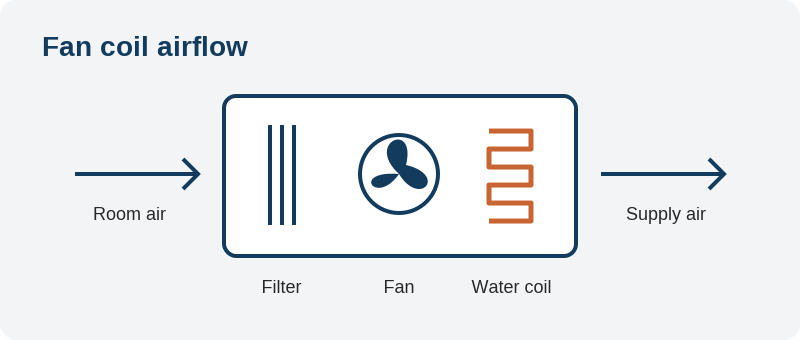
A hydronic fan coil moves room air through a coil supplied with hot or chilled water. In a condo, the building may control when heating or cooling is available. If airflow is weak or the room temperature is uneven, note when it happens and ask building management whether other units are affected before requesting service.
The Heating and Cooling Inside Your Suite
In most Toronto and GTA condominium towers, your suite’s heating and cooling come from a fan coil unit: a compact cabinet, usually in a closet or bulkhead inside your suite, containing a coil, a fan, a filter and controls. Hot or chilled water from the building’s central plant circulates through the coil, and the fan moves your suite’s air across it — warm in winter, cool in summer. When the unit is healthy, you never think about it. When it is neglected, it becomes the source of common condo complaints we hear: weak heating, noisy operation, musty smells and, in the worst cases, water where water should never be.
ARMANCH services, repairs, maintains and replaces fan coil units for condo owners, property managers and condominium buildings across Toronto and the Greater Toronto Area. This page explains what part of the system is yours, what goes wrong, and what a proper service actually covers. For how fan coils fit into a building’s wider system, see our explainer on the uses of fan coil units.
What You Control — and What the Building Controls
A fan coil system has two halves, and they belong to different people. The building owns the plant: the boilers and chillers, the pumps and the risers that deliver hot or chilled water to your floor, and the seasonal changeover that decides whether the risers carry heating water or cooling water. No suite contractor can change those, and we will not pretend otherwise — if the building has not switched over yet, no in-suite repair will give you cooling, and questions about changeover timing, building-side failures and common-element repairs belong to your property management and condo board, not to a service visit.
What is inside your suite is yours to maintain: the coil, the fan and motor, the filter, the control valves and the actuator that opens and closes them, the thermostat, and the drain pan and drain line that carry away summer condensate. In most GTA condominiums that in-suite unit is the unit owner’s responsibility, and its condition is what decides your comfort between the building’s changeovers. That split is exactly why fan coil problems need honest diagnosis: the same “no cooling” complaint can be a failed actuator in your closet or a building-side issue no suite visit can fix, and you should be told which one it is.
The Drain Pan: The Small Part With the Expensive Failure
Every summer, the coil inside your fan coil wrings moisture out of humid Toronto air. That water collects in a drain pan and leaves through a drain line. It is an unglamorous arrangement, and it is the one that causes water damage. Pans corrode. Drain lines clog with the same dust and biological growth that collect on a neglected coil. A pan that overflows does not announce itself politely: it stains ceilings, swells flooring and can drip into the suite below, where the damage — and the dispute about who pays for it — is considerably larger.
This is the factual case for fan coil maintenance, and it is not a sales line: the cheapest part of the whole system protects the most expensive things around it. A service visit that does not include the pan and drain is not a complete visit.
What Goes Wrong
The failures follow the components. A coil matted with dust and, in neglected units, mould growth restricts airflow and produces the musty smell owners notice first. A tired fan motor or worn bearing makes the unit loud, then makes it stop. Valves and actuators fail in both directions — a valve stuck closed gives you no heat; one stuck open gives you heat you did not ask for and a suite that will not cool. Thermostats and control boards drift or fail. Filters clogged past any reasonable interval starve the whole unit. And the pan and drain problems above run quietly underneath all of it.
Several of these faults imitate each other. Weak airflow can be the filter, the coil, the motor or the duct of a horizontal unit. Diagnosis in order — airflow, coil condition, water flow through the valves, then controls — is what separates a repair from a guess. This is the work ARMANCH is known for: serious troubleshooting of complex problems, across the full spectrum of HVAC-R, in buildings where access, scheduling and the neighbours below all matter.
What a Proper Service Visit Covers
A complete fan coil service covers the unit as a system: filter replaced or cleaned as its type requires; coil cleaned in place with the surrounding finishes protected; blower and motor checked and cleaned; drain pan inspected, cleaned and treated, and the drain line flushed and proven clear; valves and actuator exercised and verified against the thermostat’s calls; electrical connections and controls checked; and the unit run and observed, not just glanced at. Where we find mould contamination on the coil or insulation, we will tell you plainly what cleaning can and cannot achieve, and when replacement of the affected component is the honest answer.
For condominium buildings and property managers, we offer maintenance plans and suite-by-suite programmes — buildings are exactly where planned fan coil maintenance earns its place, because one neglected pan can become several suites’ problem. Individual owners with a single suite usually do better with a sensible service pattern — a visit before the cooling season, and when anything changes — and we will say so rather than sell a plan out of habit. Related equipment in the same buildings is covered on our water-source heat pump page and our air handler page: many GTA towers use one or the other in place of, or alongside, fan coils.
Repair or Replace?
Our rule is simple: repair first, if it makes sense. A failed actuator, valve, motor or control in a sound unit is a repair. Replacement of the whole in-suite unit becomes the honest conversation when the coil itself is corroded or leaking, when the cabinet and insulation are contaminated beyond cleaning, or when the unit has reached the end of its service life and repairs are stacking up. A replacement must match the building’s system — coil capacity, valve arrangement and controls all have to suit the plant it connects to — and the work is scheduled around the building’s requirements and access rules, which we coordinate with you and your property management.
Pricing is published before we start. A fan coil service call to an individual suite is a residential call: $130, including travel and the first 30 minutes of work, with additional labour at $110 per hour. Work for condominium buildings and property managers is at commercial rates: $170 for the call and $150 per hour. Prices exclude HST; standard-rate hours are Monday to Friday, 7 a.m. to 3 p.m. And one rule protects you completely: no diagnosis, no charge. Full terms are on our service pricing page.
ARMANCH Inc. provides HVAC-R service, repair, maintenance and installation across the Greater Toronto Area for residential, condominium, commercial and industrial clients. We are also the team behind a patented all-in-one heat pump now in its certification phase — see the campaign: https://fundrazr.com/armanch-hvac